
Standard constructions
More wires per strand = more flexible. Fewer = stiffer and more abrasion-resistant. Not sure which you need? The use notes below cover 90% of jobs — or just call.

19×7 Non-spin
1960 N/MM²Rotation-resistant — for single-fall hoisting and crane work where the load must not spin.
View sizes →
7×19 Flexible
1960 N/MM²The best all-rounder — flexible enough for pulleys, winches, gym cables and zip wires.
View sizes →
7×7 Semi-flexible
1960 N/MM²Firmer than 7×19, stiff and strong — straining wires, fencing, lashing and general duty.
View sizes →
6×36 IWRC
1960 N/MM²Steel-core lifting rope — the construction our slings are made from. High strength, good flexibility.
View sizes →
6×19 Fibre core
1960 N/MM²Fibre core holds lubricant and flexes well — winch ropes, haulage and marine deck work.
View sizes →
6×7 Fibre core
1960 N/MM²Flexible, abrasion-resistant and economical — standing rigging, guy wires and fencing strainers.
View sizes →
1×19 Strand
1960 N/MM²Barely flexes at all — the choice for tensioned architectural wires, stays and catenary lines.
View sizes →PVC coated
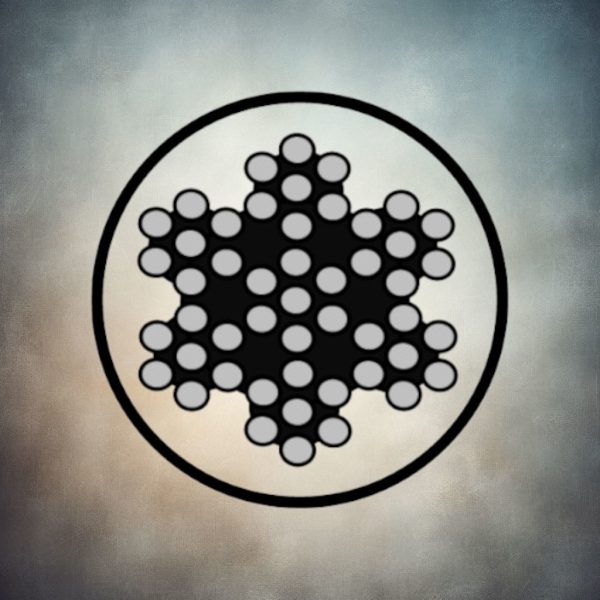
A clear or coloured plastic jacket over galvanised rope — kinder to hands, paintwork and whatever the rope runs against.

Pre-wound value reels
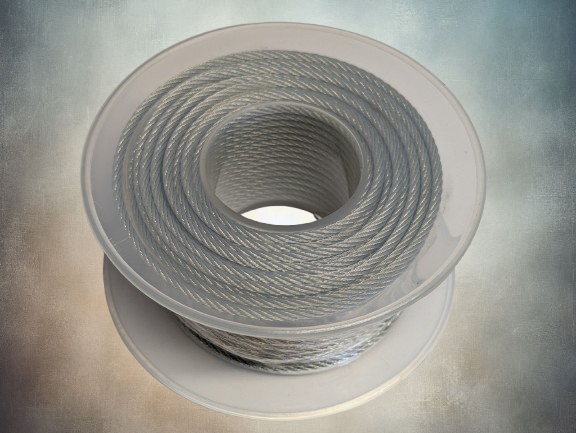
Fixed-length reels wound and ready on the shelf — A convenient way to get your wire fast.
Galvanised or stainless?
Rule of thumb: outdoors near salt or on show — stainless. Working hard out of sight — galvanised costs less for more strength.
Need it cut, terminated or certified?
Any rope on this page can leave as a finished assembly — swaged, thimbled, proof loaded and stamped under the same roof.